
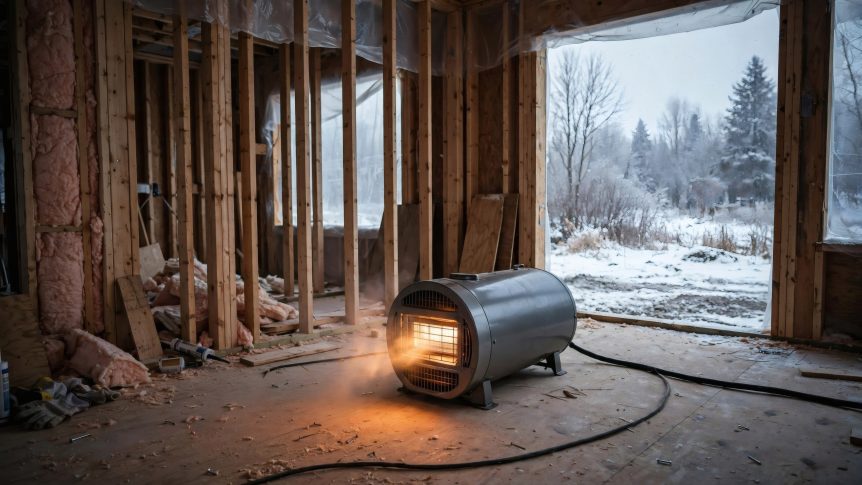
When temperatures drop, temporary heaters help contractors keep projects moving. Crews may rely on them to warm work areas, protect materials, dry finishes or support cold-weather construction. However, temporary heat on a jobsite can also introduce serious fire and safety risks when crews overlook heater placement, combustible materials, fuel sources or ventilation.
Why Temporary Heat Creates a Fire Risk
Construction sites change constantly. Lumber, cardboard, insulation, tarps and other combustible materials can move closer to a heater throughout the workday. A heater that started the morning in a safe location may pose a much different risk several hours later.
Temporary heaters can also create problems when crews place them on unstable surfaces, use damaged equipment or position them where equipment and workers can knock them over.
OSHA Temporary Heating Devices requires contractors to maintain appropriate clearance between temporary heating devices and combustible materials. For example, OSHA requires at least 10 feet between heaters and combustible tarpaulins, canvas or similar coverings. OSHA also specifies clearance requirements for circulating and radiant heaters.
Pay Attention to Fuel and Ventilation
Fuel-fired heaters bring additional concerns. Propane, kerosene, diesel and other fuels require proper handling and storage. Damaged hoses, loose connections or improperly maintained equipment can increase fire or explosion risks.
Ventilation matters, too. Fuel-burning heaters need enough fresh air for safe combustion. OSHA requires sufficient fresh air and calls for special attention to ventilation when crews use heaters in confined spaces.
Contractors should select equipment designed for the specific environment and follow the heater manufacturer’s instructions for operation, fueling, ventilation and clearance.
Make Temporary Heat Part of Daily Site Safety
A heater should not become a “set it and forget it” piece of equipment. Conditions can change quickly on an active jobsite.
Before and during heater use, contractors should:
- Inspect heaters, fuel lines, hoses, regulators, cords and connections.
- Keep combustible materials away from heat sources.
- Maintain the manufacturer’s required clearances.
- Position heaters on stable, level surfaces.
- Keep heaters away from exits and busy walkways.
- Provide adequate ventilation for fuel-burning equipment.
- Keep appropriate fire extinguishers accessible.
- Recheck heater areas as materials and work conditions change.
Regular inspections can help crews catch hazards before temporary heat contributes to a larger loss.
Don’t Overlook the Risk After Hours
End-of-day procedures deserve special attention during winter projects. Crews should follow the manufacturer’s operating instructions and the contractor’s established safety procedures before leaving temporary heating equipment running in an unattended area.
An after-hours fire can become especially damaging because no one may notice the problem immediately. Developing clear responsibilities for inspecting and shutting down equipment can help reduce that exposure.
Protect the Project Before the Temperature Drops
Temporary heat may seem like a routine part of winter construction, but contractors should treat heaters as an important part of their overall fire-prevention plan. Proper placement, ventilation, equipment inspections and housekeeping can help crews stay productive without adding unnecessary risk.
Contractors should also review their construction insurance program with their insurance professional. Builder’s risk, equipment coverage, property coverage and other policies can respond differently depending on the project and circumstances of a loss. Understanding coverage before winter work begins can help prevent unexpected gaps.